Barramundi Merlot 2018 Review:
What Happens When a £6.99 Merlot Gets Eight Years of Bottle Age? Every now and again you find a bottle that you buy more out of curiosity than expectation. This was definitely one of those. I found this 2018 Barramundi Merlot languishing at the back of Moss Delph Stores, one of those little independent shops…
What Happens When a £6.99 Merlot Gets Eight Years of Bottle Age?
Every now and again you find a bottle that you buy more out of curiosity than expectation. This was definitely one of those.
I found this 2018 Barramundi Merlot languishing at the back of Moss Delph Stores, one of those little independent shops that seems to sell a bit of everything and occasionally has a really random selection of wine. The price had actually rubbed off the bottle, so when I took it to the till the owner settled on £6.99.
Sold.
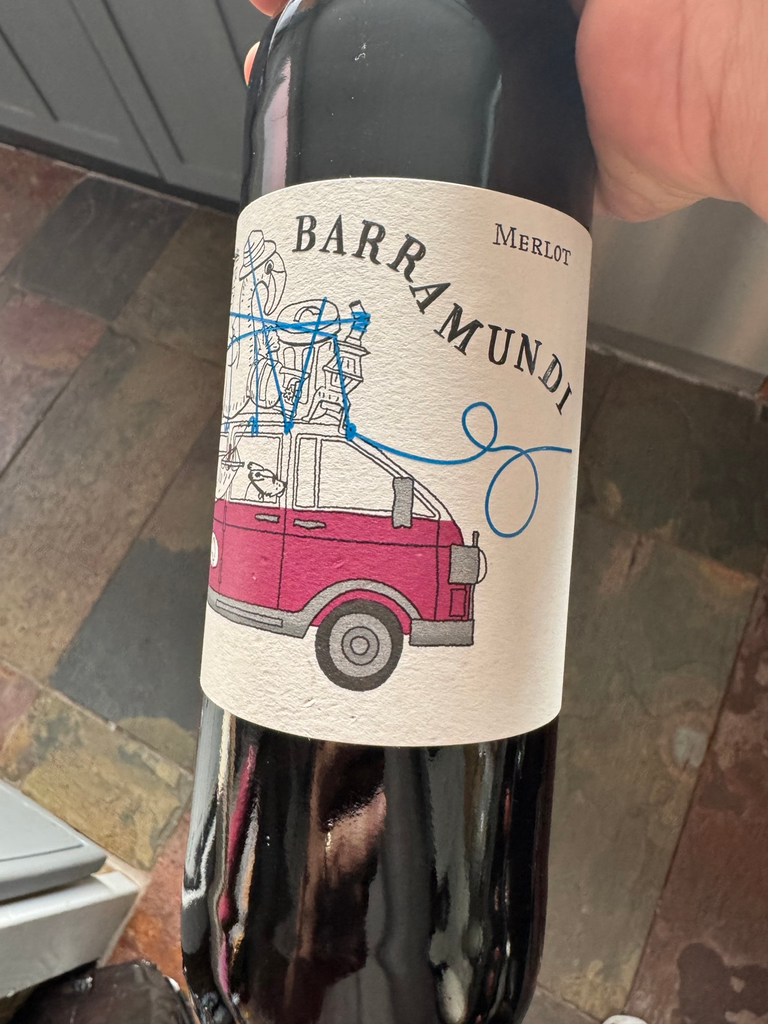
What interested me wasn’t necessarily the wine itself. It was the vintage.
You just don’t see many everyday Merlots from 2018 sitting on shelves anymore. In supermarkets, stock gets turned over so efficiently that wines like this disappear long before they reach this sort of age. Here was an inexpensive Australian Merlot, under screw cap, that had somehow survived until 2026.
The obvious question was whether it had survived well.
First Impressions
I was slightly concerned about how it might have been stored. This isn’t a specialist wine merchant with temperature controlled storage, so there was always the possibility that eight years of unknown conditions had done some damage.
I decanted it for around 40 minutes before properly getting into it.
The colour immediately showed its age. There was still plenty of red in the glass, but it had developed a slightly bricky appearance around the edges.
The nose was where I first thought this had probably edged just beyond its best.
There wasn’t really any obvious fresh fruit left. I could perhaps find a little raisin character, but otherwise it was quite subdued. Nothing suggested the wine was faulty or completely oxidised. It just smelled mature.
In The Glass
This is where things became much more interesting.
My first thought was red liquorice cables. That slightly sweet, chewy red fruit character was immediately recognisable, followed by a little black liquorice underneath.
Then came probably the strangest tasting note I’ve written in a while. Blackcurrant Lemsip!!
That was genuinely what it reminded me of. There was still a blackcurrant character buried in there, but rather than tasting like fresh blackcurrants it had become slightly medicinal and herbal.
Despite the lack of fresh fruit, the wine hadn’t fallen apart. The finish was actually pretty good, with those flavours hanging around for a solid 10 to 15 seconds. For a £6.99 Merlot approaching its eighth birthday, I really couldn’t complain.
Has It Gone Past Its Best?
I think slightly, yes.
This doesn’t taste like a wine that has been ruined by poor storage. Instead, it tastes like a wine that has simply lived a little longer than it was probably intended to.
The fresh plum and cherry fruit I’d expect this to have shown when young has largely disappeared. What’s left is softer, more savoury and more developed, with dried fruit, liquorice and that unusual medicinal fruit character.
But there is an important distinction between a wine being past its peak and a wine being dead. This definitely isn’t dead!
My acid test with most wines is very simple. After finishing the first glass, how badly do I want another one, with this, I wasn’t desperate for another glass. I was perfectly happy to have one, but it wasn’t calling me back to the bottle.
That probably tells you more about where the wine is in its life than any individual tasting note could.
Then Something Happened Overnight
I’d deliberately left a glass or two for the following day and this was probably the most interesting part of the whole experience.
The wine had evolved again. Suddenly I was getting cherry, not fresh cherry exactly. It was very specifically cherry soothers.
That same slightly medicinal lozenge character was still there, but the fruit had become much clearer. What had started as blackcurrant Lemsip the night before had shifted towards a sweeter red cherry character after being exposed to oxygen overnight.
For a relatively inexpensive wine with eight years behind it, I half expected the remains of the bottle to be completely gone by the following day. Instead, it was still alive and arguably showing more identifiable fruit than it had when first opened.
Through The Terroir Verdict
This wasn’t the best Merlot I’ve ever drunk and I don’t think eight years of ageing has necessarily made it a better wine.
But that’s precisely why I’m glad I bought it. Most inexpensive wines are consumed young, which means we rarely get the opportunity to find out what actually happens to them when they’re left alone for this long. This bottle gave me the chance to taste that development for myself.
The fruit hadn’t completely disappeared, but it had changed considerably. The colour had started turning brick red, the nose had become subdued and the palate had moved away from fresh fruit towards liquorice, dried fruit and medicinal cherry and blackcurrant flavours.
Most importantly, the wine was still perfectly enjoyable and for £6.99, I couldn’t really ask for much more.
In fact, I’m now tempted to find a 2023 or 2024 vintage of exactly the same wine and put the two side by side. I’d love to see the fresh fruit that has disappeared from this bottle and work backwards to understand exactly what those extra years have done.
Sometimes wine doesn’t need to be exceptional to be interesting and this was!
Through the Terroir Verdict
Barramundi Merlot 2018
Region: South East Austrailia
Grape: Merlot
Price: £6.99
Tasting Notes
On the Nose: Subdued fruit, raisin and dried fruit character.
On the Palate: Red liquorice cables, black liquorice and an unusual blackcurrant Lemsip character. After being left overnight, the fruit opened considerably into cherry Soothers.
Finish: Surprisingly persistent at around 10 to 15 seconds, with lingering liquorice and medicinal red fruit.
Verdict
Slightly past its best, but certainly not dead. The fresh fruit has faded into dried, liquorice and medicinal flavours, while the finish has held up remarkably well. More interesting than irresistible, but for £6.99 this was a fascinating opportunity to see what eight years does to an everyday Merlot.
Score: 84/100
Where to buy:
This is a bottle from Moss Delph Stores in Aughton